
All in One Washer Dryer: Pros, Cons, and What Really Matters

Who benefits most?
Small households (1–3 people), apartment and condo dwellers, homes without existing dryer vents, and anyone prioritizing convenience over raw throughput.
Who might want separate units?
Large families doing multiple loads daily, those frequently washing bulky items like king comforters, or homes already set up for stacked or side-by-side pairs.
All-in-one washer dryer combos are typically priced in the $1,700–$2,500 range, which is comparable to or sometimes higher than the price of separate units.
The core trade-off: space and energy savings vs. longer cycle times.
Modern heat pump combos can take 3–4 hours to wash and dry a full load, but they use significantly less energy than many traditional vented dryers.
On average, people leave clothes in the washer for about 130 minutes, which can lead to issues like bacterial growth; all-in-one units help reduce this average wait by streamlining the laundry process.
How All in One Washer Dryers Work
A washer dryer combo combines a front-load washer and a ventless dryer in one drum.
The machine first tumbles your clothes in water and detergent like any standard front-loader, drains the excess water, then switches to drying mode without requiring you to move anything.
All-in-one washer-dryer combos wash clothes using the same wash, rinse, and spin cycles as traditional washers.
Most US all in one washer dryers use ventless drying—either basic condensation or more advanced heat pump systems.
Condensing dryers heat air in the drum to absorb moisture from clothes, then pass the hot, moist air over a cool heat exchanger to condense the moisture. Here’s how the leading 2024–2025 models handle it:
GE Profile UltraFast Combo runs on a 120V heat pump system that recirculates warm air to pull moisture from clothes, then sends the water down the drain.
Most washer-dryer combos are ventless but require a drain or water-collecting reservoir for moisture removal.
This model can dry up to 12 pounds of laundry in about 3–3.5 hours while using roughly half the power of a conventional 240V vented dryer.

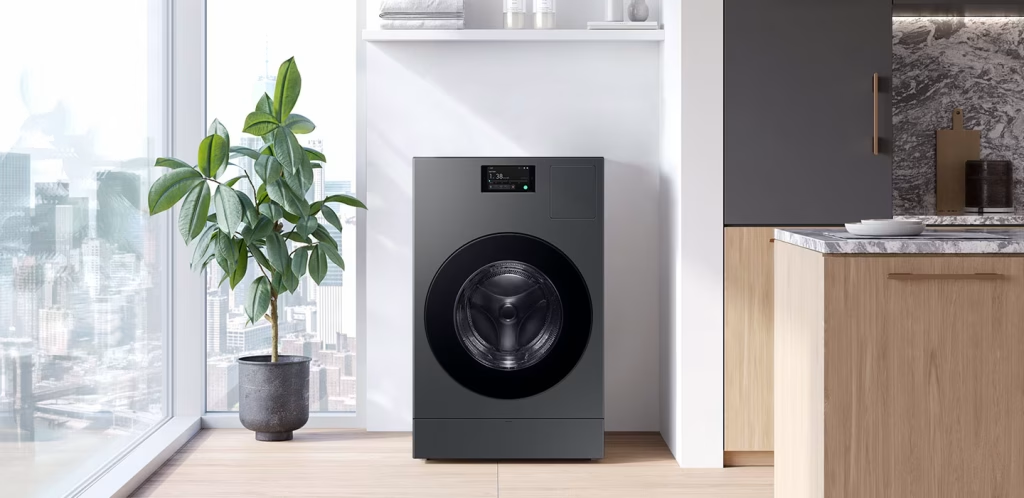
Samsung Bespoke All-in-One features ventless heat pump drying plus an auto-pop door that opens after cycles to release residual moisture and reduce mildew risk.
The door can also be opened after drying to help prevent mold. It also includes AI-driven soil sensing through the SmartThings app for cycle recommendations.
LG WashCombo uses an inverter heat pump paired with a direct-drive motor, allowing precise temperature and drum speed control to protect fabrics during lower-heat drying.
Heat pump dryers use hot air to absorb moisture, which passes through an evaporator that collects the water and reuses the hot air in a loop until clothes are dry.
Since these machines don’t require exterior exhaust ducts, they can plug into standard 120V or 240V outlets depending on the model, which affects both cycle times and installation flexibility.
All-in-one washer-dryer combos typically run on 110 volts, unlike most conventional dryers that require 220 volts.
When comparing model performance, factors such as drum capacity, drying times, and voltage requirements influence the overall effectiveness and efficiency of washer-dryer combo machines.
Key Advantages of All in One Washer Dryers
Here’s why people love these machines—and why 2024–2025 models have become genuinely competitive with traditional setups.
Space saving.
A combo unit replaces two 27–29 inch appliances with a single machine, typically around 27 inches wide. This is ideal for apartments, condos, townhomes, and closet installations.
Because ventless designs (like those in Samsung Bespoke and LG WashCombo) don’t need a 4-inch exhaust duct, you can place them in interior spaces, basements, or older homes where running ductwork would be expensive or impossible.
Convenience.
The “set it and forget it” workflow is the biggest draw. Load your clothes, select a wash+dry program, and come back to fully dry garments—no transferring damp laundry between machines.
All-in-one washer dryer combos allow you to set a laundry schedule and manage your routines more flexibly, reducing the need to be present for separate wash and dry cycles.
The combo unit also saves time and effort by combining both functions in one machine. Current models add smart features like Wi-Fi connectivity, app notifications, cycle recommendations, AI-based soil sensing, and remote start through platforms like GE’s SmartHQ, Samsung SmartThings, and LG ThinQ.
Energy and water efficiency.
Heat pump all in ones, often ENERGY STAR rated, use substantially less electricity than standard vented electric dryers.
A 12-pound cotton load drying in about 3.5 hours on a GE UltraFast-style combo uses roughly half the energy of a conventional dryer. Front-load washer designs also use less water than top-loaders—often important in regions with high water costs.
Some consumers appreciate that all-in-one washer dryer combos do not add much heat load to the house, which can save on air conditioning costs.
Gentler on clothes.
Lower drying temperatures and moisture sensors prevent overdrying, extending garment life. This matters especially for synthetics, activewear, and delicate fabrics that can’t handle high heat.
Ideal for:
one- or two-person households, empty nesters, urban renters, second homes, accessory dwelling units, and tight laundry closets where stacking is impossible.

Capacity vs. effective drying load.
Most units list 4.5–5.3 cubic feet of drum capacity, but the practical “wash and dry in one go” load is smaller—often 60–70% of the drum volume for good drying performance.
Bulky items like king comforters, large duvets, and thick towels may require partial loads or additional dry time. Large loads sometimes emerge damp when air can’t circulate properly.
The drying performance of all-in-one washer dryer combos is often rated poorly compared to traditional dryers, according to consumer ratings.
Upfront cost.
Modern all in ones with heat pumps typically run $1,700–$2,500 MSRP in 2024–2025, comparable to or higher than a mid-range separate washer and dryer pair.
Incentives, rebates, or seasonal promotions may narrow this gap, especially for ENERGY STAR heat pump combos eligible for utility rebates.

Repair risk and complexity.
Combining two appliances into one means a single point of failure. If the machine needs service, you lose both washing and drying.
Not every regional service provider is familiar with newer heat pump combo technology yet, which can extend repair wait times. Repairs for all-in-one washer-dryer combos can also be costly due to the complexity of their design and the number of moving parts.
Learning curve.
Users often need to adjust habits: smaller loads, proper sorting, choosing the right cycles, and accepting different noise and heat patterns compared with vented dryers. Consumer ratings often reflect these longer drying times and performance trade-offs.

Water efficiency.
Front-load washer designs in combos typically use 30–50% less water than traditional top-load agitators—important in regions with high water or sewer costs.
Time efficiency.
While each combined cycle runs longer, some users gain hands-off time because they don’t need to be home to move loads.
Clothes go directly from dirty to dry automatically, which can save time for busy schedules.
The average drying time for all-in-one washer dryers typically ranges from 2 to 6 hours for a full cycle, depending on load size and fabric type.
Home comfort.
Ventless heat pump systems release relatively cool, dehumidified air, which can be beneficial in warm months but may slightly reduce incidental space heating in winter compared to vented dryers.
Cost of ownership. Higher upfront prices may be offset over 8–12 years by lower utility costs, especially where electricity rates are high or gas isn’t available.
Check local utility rebates and federal incentives for qualifying high-efficiency heat pump laundry appliances.

As heat pump technology continues improving through the mid-2020s, all in one washer dryers are likely to become even more common in small and high-efficiency homes.
Assess your space, habits, and utility costs, then compare current models to decide if an all in one is the right purchase for your home.

Stay Ahead of
the Spin Cycle
Sign up for the latest in washing & drying tech, eco detergents, and more clever laundry room ideas—no fluff!